Common Hinged Screen Door Problems and How to Prevent Them
Hinged screen doors are a simple and effective way to improve airflow, keep insects outside, and add convenience to your home. Whether installed on a front entry, patio, or back door, these screen doors provide fresh air while helping maintain comfort indoors. Like any frequently used feature of your home, hinged screen doors can experience wear and tear over time. Understanding the most common hinged screen door problems and how to prevent them can help extend the life of your door and keep it operating smoothly year-round.
Sagging Hinged Screen Doors
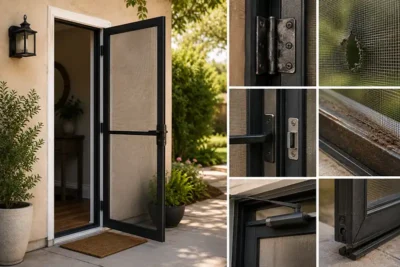 One of the most common problems homeowners experience is a sagging screen door. Over time, repeated opening and closing can place stress on the hinges and frame, causing the door to become uneven or difficult to latch properly.
To help prevent sagging:
- Tighten loose hinge screws regularly
- Avoid slamming the door
- Make sure the frame is securely installed
- Consider upgrading to heavy-duty hinges for high-traffic doors
Routine inspections can help catch small alignment issues before they become larger repair problems.
Torn or Damaged Screen Mesh
Screen mesh can become torn or damaged from pets, children, weather exposure, or accidental impact. Even small tears can allow insects and debris to enter your home while reducing the appearance of the door.
Prevent screen damage by:
- Keeping sharp objects away from the screen
- Installing pet-resistant screen mesh if you have animals
- Avoiding excessive force when opening or closing the door
- Checking for small tears and repairing them early
Modern screen materials are available in durable options designed to withstand everyday use and improve longevity.
Loose Or Worn Hinges
Hinges play a major role in the performance of a hinged screen door. Over time, constant movement and outdoor exposure can cause hinges to loosen, squeak, or wear out completely.
To prevent hinge problems:
- Lubricate hinges periodically
- Tighten hardware as needed
- Replace rusted or damaged hinges promptly
- Use corrosion-resistant hardware for outdoor applications
Well-maintained hinges help ensure smooth operation and reduce strain on the overall door structure.
Doors That Won’t Latch Properly
A screen door that does not latch securely can become frustrating and reduce the effectiveness of the door. This issue is often caused by misalignment, loose hardware, or frame movement.
You can help prevent latching issues by:
- Regularly checking door alignment
- Tightening latch hardware
- Adjusting the strike plate when necessary
- Ensuring the door frame remains level and secure
Professional adjustments may be needed if the door becomes significantly misaligned.
Rust And Corrosion
Since hinged screen doors are exposed to outdoor weather conditions, moisture and humidity can eventually lead to rust or corrosion on metal components.
Prevent rust and corrosion by:
- Cleaning the door regularly
- Drying excess moisture after storms
- Using weather-resistant materials
- Applying protective coatings when appropriate
Aluminum and powder-coated screen doors often provide excellent durability and resistance to corrosion.
Difficulty Opening Or Closing
If a hinged screen door sticks, drags, or becomes difficult to open and close, the issue may involve the hinges, frame, or door alignment. Dirt buildup and seasonal expansion can also affect door performance.
To maintain smooth operation:
- Keep tracks and thresholds clean
- Inspect hinges for wear
- Address alignment problems early
- Avoid forcing the door open or closed
Regular maintenance can help reduce unnecessary stress on the frame and hardware.
Damaged Door Closers
Many hinged screen doors use automatic closers to ensure the door shuts properly after each use. Over time, closers can weaken, leak, or fail completely.
Prevent closer issues by:
- Avoiding slamming the door
- Inspecting the closer periodically
- Replacing worn closers before failure occurs
- Using quality hardware designed for frequent use
A properly functioning closer helps improve convenience and protects the screen door from sudden impact.
Importance Of Professional Installation
Many common hinged screen door problems begin with improper installation. A poorly aligned frame or incorrect hardware can lead to premature wear, operational issues, and costly repairs.
Professional installation helps ensure:
- Proper alignment
- Secure mounting
- Smooth operation
- Long-lasting durability
- Improved overall appearance
Working with experienced professionals can help homeowners avoid future issues while maximizing the performance and lifespan of their screen doors.
Keep Your Hinged Screen Door Performing Its Best
Routine maintenance and early repairs can go a long way toward preventing common hinged screen door problems. By keeping hardware secure, cleaning components regularly, and addressing small issues quickly, homeowners can enjoy years of reliable performance and improved comfort.
Whether you need a new hinged screen door installation, replacement screen mesh, or professional repairs, investing in quality materials and proper maintenance helps keep your home comfortable, functional, and protected throughout the year.